
Cloud POS vs Traditional POS: Which Should You Choose?
Cloud POS vs Traditional POS: The Core Difference
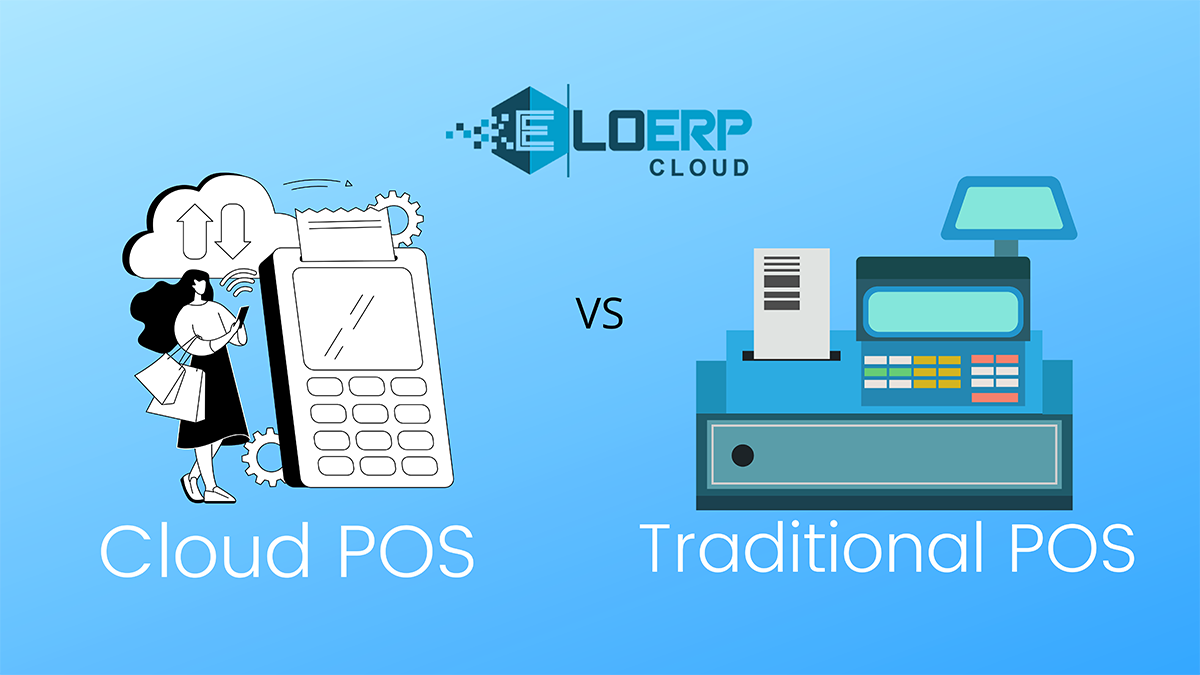
The fundamental difference between cloud POS and traditional POS is where the software runs and where data is stored. A traditional POS (also called legacy or on-premise POS) runs on a local server or workstation inside the business. A cloud POS runs on remote servers and is accessed via the internet — usually through a browser or a lightweight app on a tablet or PC.
This architectural difference has practical consequences for cost, reliability, maintenance, and capability. Understanding those consequences is what this guide is about.
What Is a Traditional POS System?
A traditional POS system consists of dedicated hardware (a POS terminal, cash drawer, receipt printer, barcode scanner) and software installed directly on that hardware or on a local server. The software runs entirely on-site. Sales data, inventory records, and customer information are stored locally.
Traditional POS systems were the standard for retail and hospitality for decades. They are robust, work without internet connectivity, and give the business full control over its data. The trade-off is upfront cost, maintenance responsibility, and limited remote access.
Common examples: Legacy versions of NCR, Epicor, Lightspeed (desktop), older QuickBooks POS installations.
What Is a Cloud POS System?
A cloud POS system stores data and runs core processing on remote servers. The POS terminal — whether a dedicated unit, a tablet, or a PC — communicates with the cloud in real time. Sales, inventory updates, and customer records sync instantly across all terminals and locations.
Cloud POS systems are accessed via subscription, typically billed monthly or annually per terminal or per location. Updates are automatic. New features roll out without requiring manual installation. Managers can view sales, stock levels, and staff performance from any device with internet access.
Common examples: Square, Shopify POS, Lightspeed Retail (cloud), Toast (restaurant), EloERP Cloud.
Cloud POS vs Traditional POS: Feature Comparison
Installation and Setup
Traditional POS: Requires hardware procurement, software installation, local server setup (in larger deployments), and configuration by a technician. Setup typically takes days to weeks depending on complexity.
Cloud POS: Hardware setup is minimal (often just a tablet and card reader). Software configuration happens online. Most cloud POS systems can be operational within hours of signing up.
Verdict: Cloud POS wins on speed and simplicity of setup.
Upfront Cost vs Ongoing Cost
Traditional POS: Higher upfront cost. Software licences are often purchased outright (one-time fee). Hardware is owned. Ongoing costs include maintenance contracts, IT support, and periodic hardware replacement.
Cloud POS: Lower upfront cost. Software is subscription-based (monthly or annual). Hardware may be rented or purchased. However, subscription fees accumulate over time — a multi-year total cost of ownership can exceed the traditional model.
Verdict: Traditional POS may be cheaper long-term for stable, single-location businesses. Cloud POS is lower risk for new businesses and lower initial outlay for multi-location operators.
Internet Dependency
Traditional POS: Works entirely offline. Internet outages have no impact on sales processing.
Cloud POS: Requires internet for full functionality. Most modern cloud POS systems include an offline mode that caches transactions locally and syncs when connectivity is restored. The quality of offline mode varies significantly between vendors.
Verdict: Traditional POS is more reliable in areas with poor or unreliable internet. For businesses with stable broadband, a cloud POS with a solid offline mode is usually sufficient.
Data Access and Reporting
Traditional POS: Reports are generated from local data. Remote access typically requires VPN or third-party reporting tools. Real-time visibility from outside the store is limited without additional infrastructure.
Cloud POS: Full real-time access to sales data, inventory, and reports from any device. Multi-location consolidated reporting is standard. Owners and managers can check live performance from anywhere.
Verdict: Cloud POS wins decisively for remote visibility and multi-location reporting.
Updates and Maintenance
Traditional POS: Software updates are manual. Major version upgrades often require paid support contracts or technician visits. Hardware maintenance is the business’s responsibility.
Cloud POS: Updates are automatic and included in the subscription. New features, compliance updates (tax rate changes, payment security standards), and bug fixes roll out without business involvement.
Verdict: Cloud POS is significantly lower maintenance.
Security
Traditional POS: Data is stored on-site, which means it is within the business’s physical control. However, local servers require active patching and security management to stay protected. A physical breach (theft of hardware) or ransomware attack can compromise all local data.
Cloud POS: Data is stored on managed cloud infrastructure with professional security teams, redundant backups, and automatic compliance updates (PCI DSS, for example). The trade-off is that data is held by a third-party provider.
Verdict: Cloud POS generally offers better security for small businesses that lack dedicated IT resources.
Scalability
Traditional POS: Scaling to additional locations requires new hardware, new software licences, and IT support at each site. Consolidating data across locations requires additional software (often expensive).
Cloud POS: Adding a new location or terminal is a configuration change. All locations share the same database automatically. Inventory, pricing, and promotions can be managed centrally.
Verdict: Cloud POS is dramatically easier to scale.
Integration with Other Business Systems
Traditional POS: Integration with accounting, e-commerce, and HR systems is possible but often requires custom work or middleware. Legacy systems may have limited API access.
Cloud POS: Modern cloud POS systems are built with open APIs and have pre-built integrations with accounting platforms (Xero, QuickBooks), e-commerce (Shopify, WooCommerce), and business intelligence tools.
Verdict: Cloud POS integrates more easily with the modern business technology stack.
When Traditional POS Still Makes Sense
Despite the advantages of cloud POS, there are scenarios where traditional POS remains the better choice:
- Unreliable internet: Businesses in locations with frequent outages or no reliable broadband cannot depend on a cloud-first system, even one with offline mode.
- Data sovereignty requirements: Some businesses in regulated industries or jurisdictions have requirements to keep data on-site.
- Long-term single-location operation: A business that is stable, single-location, and not planning to grow may find the one-time licence cost of a traditional POS cheaper over a 5-10 year horizon than ongoing subscription fees.
- Existing infrastructure investment: Businesses that have already invested in traditional POS hardware and have a functioning system may not have a compelling reason to migrate, especially if integration with other systems is not a priority.
When Cloud POS Is the Right Choice
Cloud POS is the right choice for most new businesses and for established businesses looking to modernise:
- Multi-location or growing businesses: Central management of inventory, pricing, and reporting across locations without additional infrastructure.
- Businesses needing e-commerce integration: Unified inventory and customer data across physical and online channels.
- New businesses or startups: Lower upfront cost, faster setup, no need for a local IT team.
- Businesses where the owner is not always on-site: Real-time visibility from any device is a significant operational advantage.
- Businesses in industries with complex compliance requirements: Payment security updates, tax rate changes, and regulatory compliance are handled by the vendor.
EloERP Cloud POS: Cloud POS With Full ERP Integration
EloERP Cloud is a cloud POS platform that goes beyond standalone POS to provide full ERP integration — inventory management, purchasing, accounting, payroll, and HR — in a single cloud system. Every sale at the POS posts instantly to the general ledger. Every purchase order updates stock levels in real time. There is no manual export or nightly sync.
EloERP Cloud supports 35+ industry verticals, including pharmacy, restaurant, supermarket, electronics, fashion retail, and hardware. Industry-specific workflows are pre-configured, so businesses are operational from day one without extensive customisation.
Unlike point solutions (a cloud POS that requires separate accounting software, separate payroll, and separate inventory tools), EloERP Cloud is a single platform. This eliminates the integration costs and data consistency problems that come with connecting multiple standalone systems.
Schedule a Free Demo → to see EloERP Cloud in action for your industry, or view pricing.